
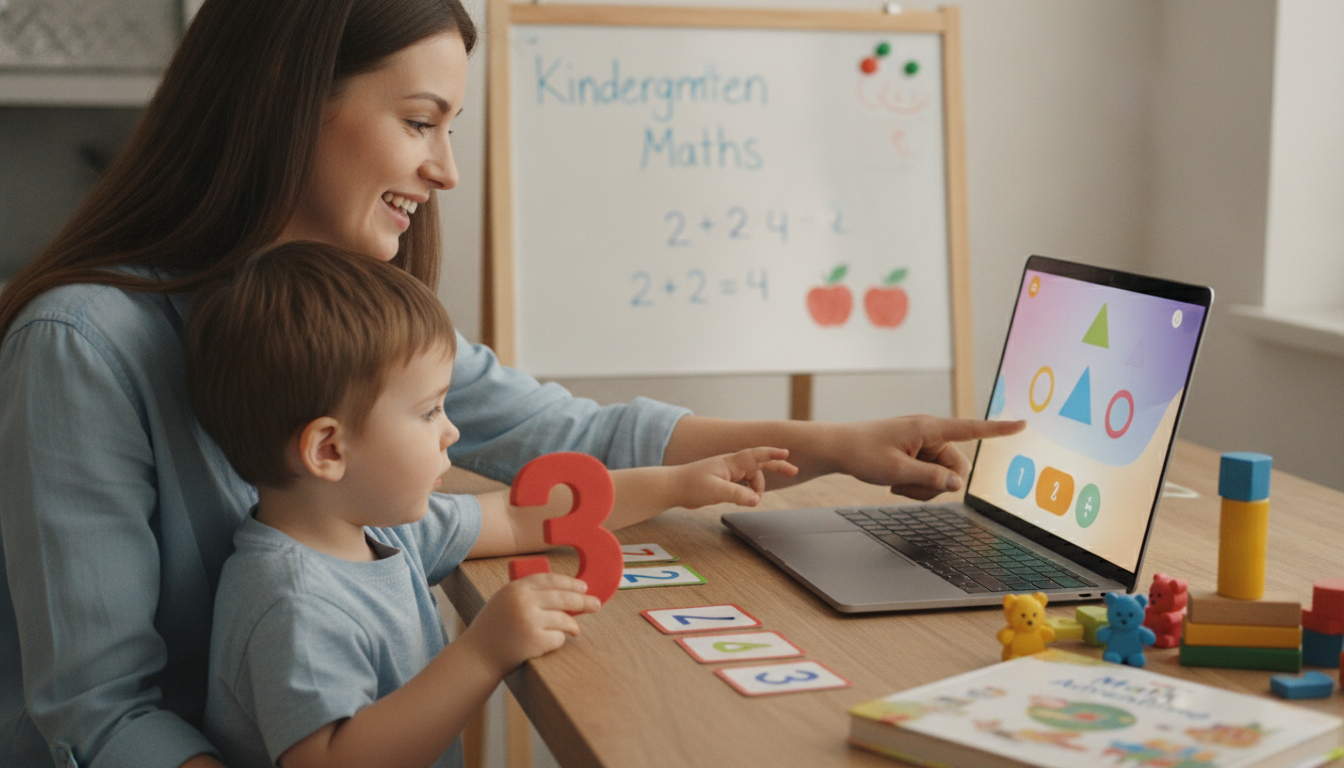
Kindergarten Maths: What Your Child Should Know and How to Practice It at Home
As a parent, it’s natural to want your child to excel in math from an early age. Kindergarten maths forms the bedrock for future mathematical understanding, and a strong foundation now can make a significant difference. This article explores what your child should know in kindergarten maths and provides practical tips for home practice. Let’s build a love for numbers together!
Understanding Kindergarten Maths
What is maths in kindergarten?
Maths in kindergarten isn’t about complex equations. It’s about developing a fundamental understanding of numbers, shapes, and patterns, the building blocks of more advanced mathematical concepts. At this age, maths is largely about exploring and discovering, building number sense, the intuitive understanding of what numbers mean. This foundation is crucial for future success, creating a strong base for calculations and problem-solving. Children explore through play and hands-on activities, fostering curiosity and a positive attitude. Developing spatial reasoning, how children understand how things relate to each other in space, is also key.
Key concepts to focus on
Key concepts include number recognition and counting (identifying numbers 1-20 and accurately counting objects). Understanding “one more” and “one less” is vital. Shape recognition (circles, squares, triangles, rectangles) and understanding attributes like size and color are also important. Pattern recognition, identifying and continuing simple patterns, develops logical thinking. Introducing basic measurement concepts, like comparing sizes (“bigger than,” “smaller than”), is beneficial. If your child is struggling with number recognition, exploring our guide to counting with a four-year-old might offer some additional ideas.
Practical Tips for Practicing Kindergarten Maths at Home
Games and activities to try
Practicing maths at home doesn’t need to feel like a chore. Simple board games, like Candy Land or Chutes and Ladders, incorporate number recognition and counting. Card games, like “Go Fish,” can be adapted to focus on number matching. Creating your own games is even better! A scavenger hunt where your child finds a specific number of objects is a fun way to practice counting. When baking, have your child count eggs or measuring cups. While grocery shopping, ask them to count apples or oranges. For more ideas, see our guide to five kitchen-table science experiments.
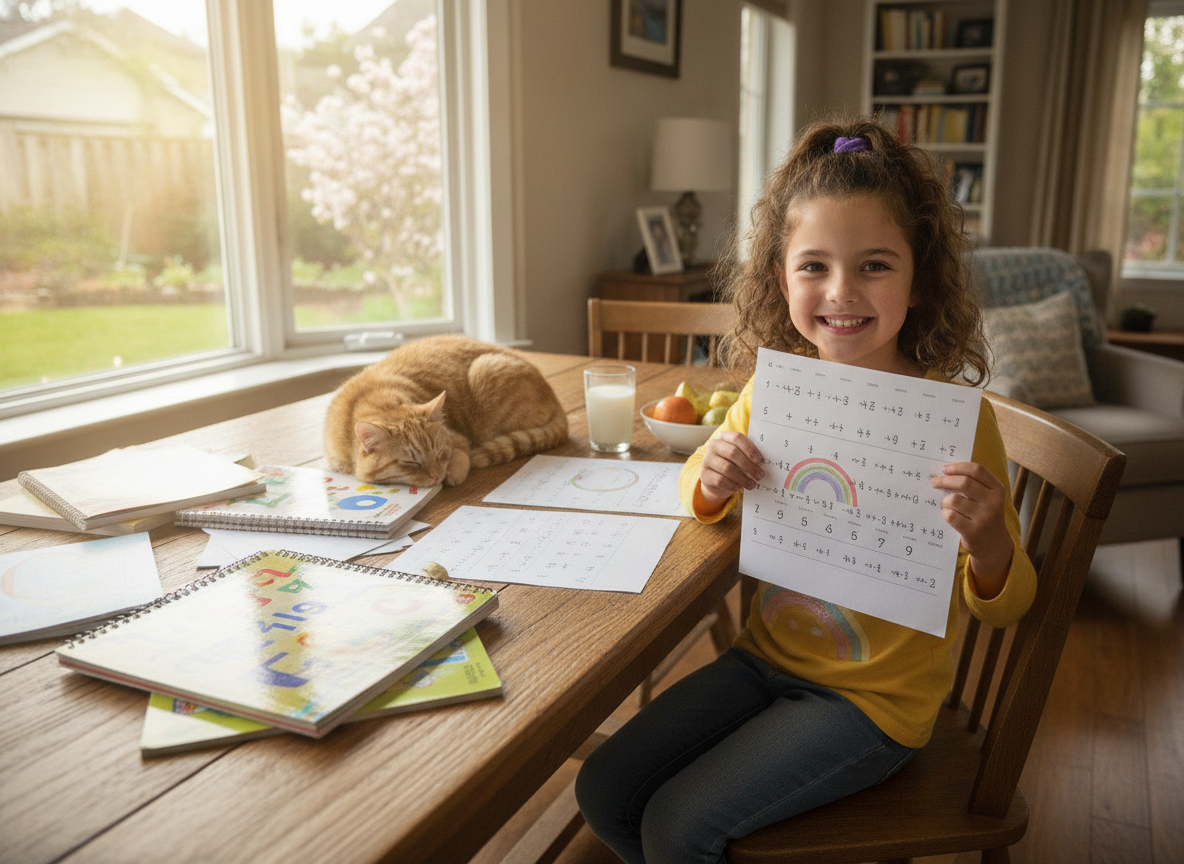
Photo by Quixess Social
Tips for creating a math-friendly environment
Creating a supportive environment is key. Make maths visible with number charts, shape puzzles, and counting bears. Praise effort, not just correct answers, and create a safe space for mistakes. Avoid pressure or comparisons. If your child is struggling with reading, remember these skills are intertwined. Consider looking at helping a child who finds reading hard for strategies.
Using Technology to Support Kindergarten Maths
Online math tutoring for kids
Online math tutoring offers personalized support. A 2025 survey showed a 35% increase in parents using online tutoring for early childhood education, citing flexibility and individualized attention. These platforms frequently incorporate interactive games to maintain engagement. While cost is a factor, many platforms offer introductory sessions.
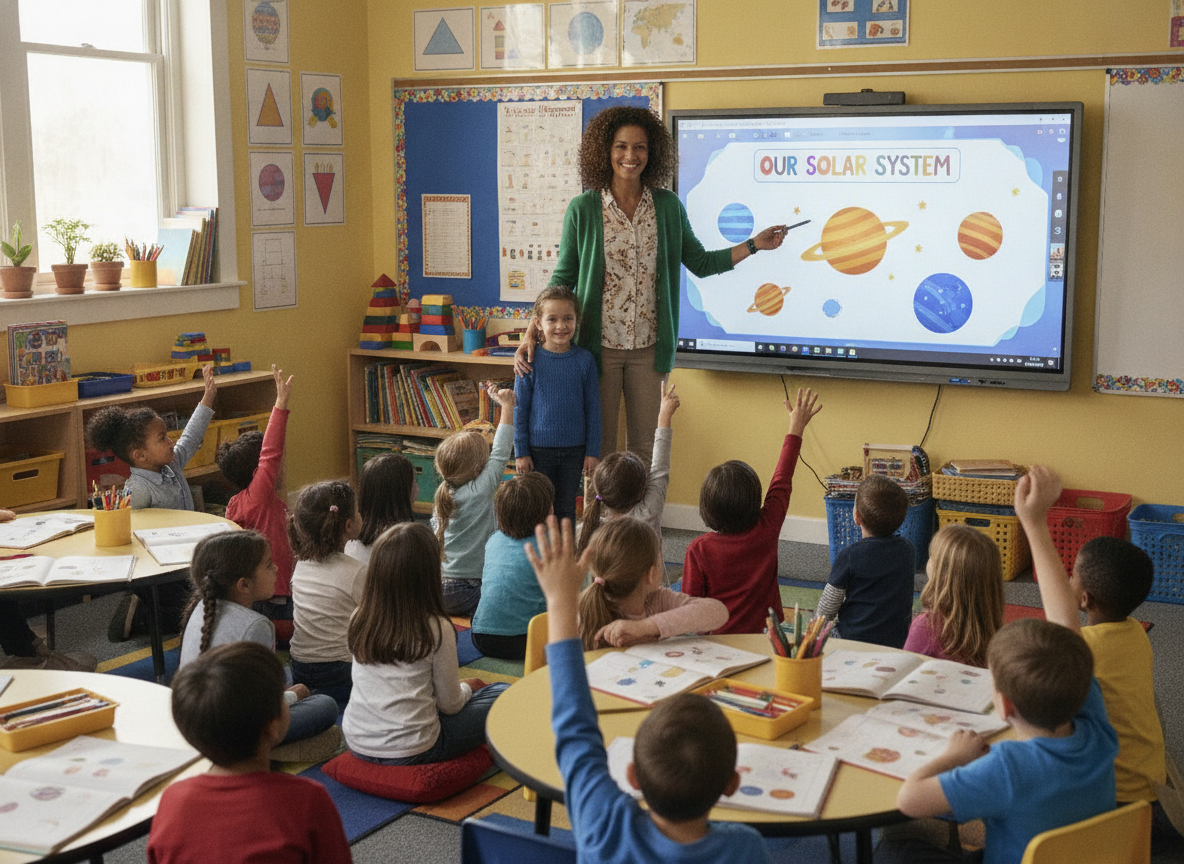
Photo by Quixess Social
Interactive learning platforms
Interactive learning platforms provide a structured and engaging environment. Tutorpip offers activities focusing on number recognition, counting, and shapes. The platform adapts to the child’s pace, providing a personalized experience. Research indicates a 15% improvement in mathematical understanding with these platforms.
Common Challenges and How to Overcome Them
Dealing with math anxiety
Math anxiety is common. Address it with patience and understanding. Avoid pressure, focus on effort, and incorporate games. Remember, fostering a love of learning is more important than mastering concepts.

Photo by Quixess Social
Supporting children with learning difficulties
Individualized support is crucial for children with learning difficulties. Breaking down concepts into smaller steps is essential. Consult with educators or specialists for tailored learning plans. For assistance, consider consulting with a qualified educational psychologist or specialist.
Conclusion
Kindergarten maths lays the groundwork for future success. By fostering a love of learning and utilizing technology responsibly, you can help your child build a strong foundation. It’s okay to make mistakes, they are valuable learning opportunities. For more ideas, check out our guide to counting games. Encouraging your child to ask questions will cultivate a lifelong love of learning. Consider how reading support can compliment their maths learning. Exploring science can also be a fun way to reinforce mathematical thinking, see our guide to kitchen science experiments.